
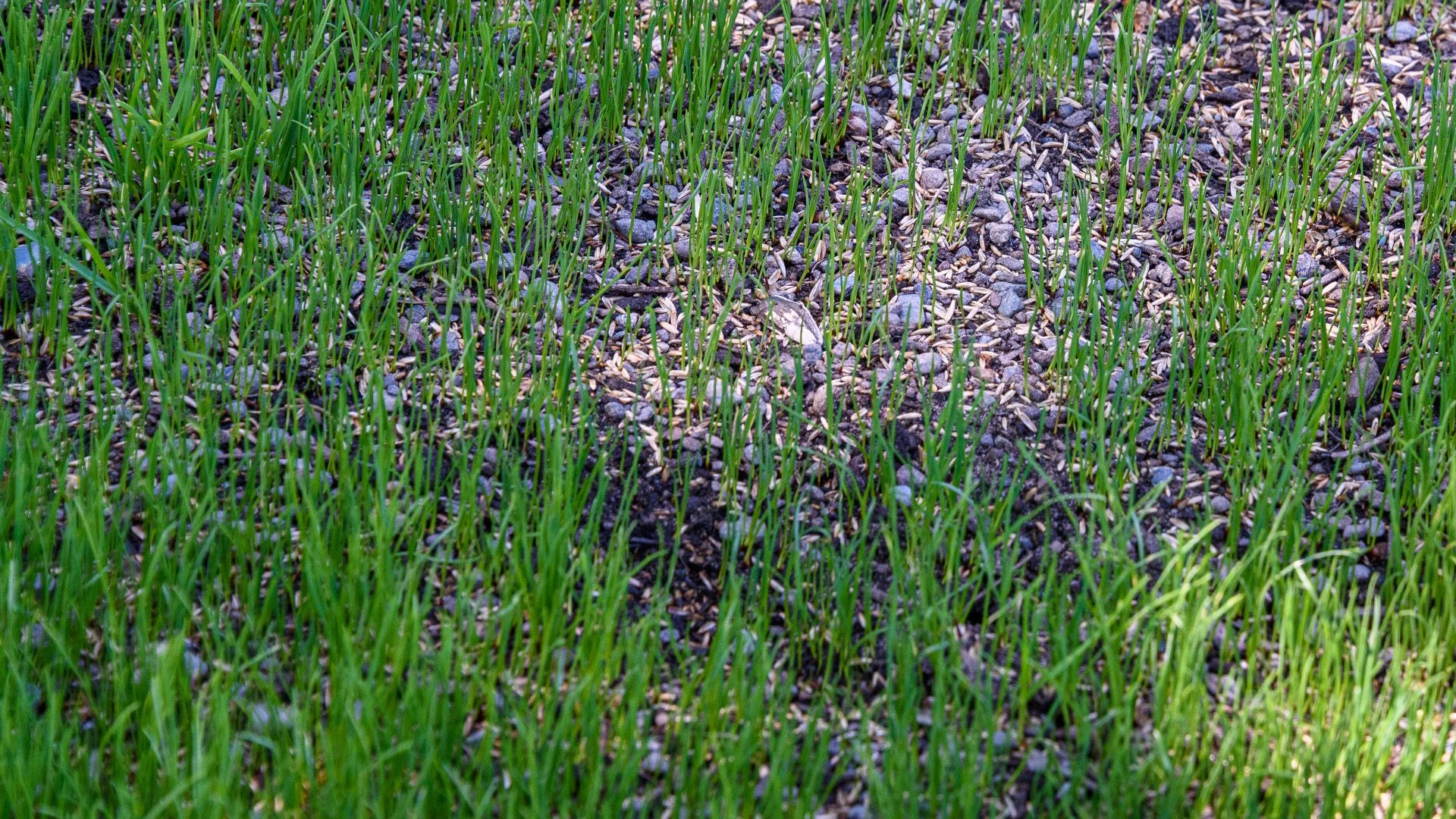
Overseeding is a great way to fill in bare spots on your lawn in Ohio and make it lush and dense. However, after overseeding your lawn, you'll need to wait a while before you mow it again. You should wait 2-4 weeks after overseeding your lawn before you mow it. That's because the new grass seedlings will need time to establish themselves in your soil and grow strong enough to withstand being mowed. Aside from this waiting period, you should also wait until the new grass is around 3 inches tall before you mow it. This ensures that there is enough leaf surface after mowing to avoid stress on the new grass. When you do mow it, you'll want to make sure that your mower's deck is at its highest setting and that you follow the 1/3 rule.
Wait 2-4 Weeks Before Mowing Your Lawn After Overseeding
After overseeding, the new seeds need time to establish themselves. It's crucial to wait at least 2-4 weeks before mowing. This period allows the seeds to germinate and develop strong roots. If you mow too soon, you risk disturbing the newly planted seeds, decreasing their chances of growing successfully.
Rushing the process can also compact the soil, making it difficult for young roots to access nutrients and water. Patience during these initial weeks is key, as it sets the stage for a lush, thick lawn. The goal is to give these young seedlings the best possible start, so hold off on mowing until they are ready.
Wait until the new grass is 3 inches tall before mowing for the first time after overseeding.
Observing the height of your new grass is another crucial factor in determining the right time to mow. Even if you've waited 2-4 weeks after overseeding your lawn, you'll still want to wait until the new grass has grown to about 3 inches tall before you mow it for the first time. At this height, the grass is generally sturdy enough to withstand the mowing process without damage.
Mowing too early can stress the young grass, leading to weak growth or even the death of the seedlings. Allowing the grass to reach 3 inches gives it enough leaf surface to produce energy through photosynthesis, strengthening its establishment. This growth also ensures that your lawn mower blades won't pull or uproot the delicate seedlings.
Set your mower's deck at the highest setting and follow the 1/3 rule during the first mow of your newly overseeded lawn.
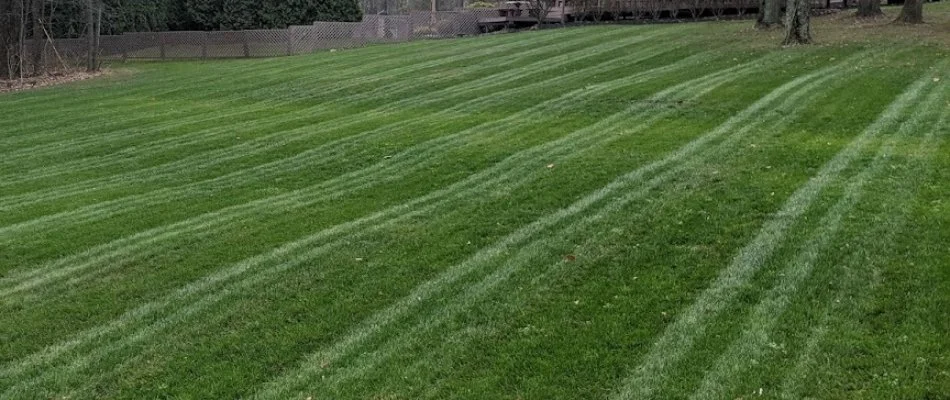
When you're ready to mow your newly overseeded lawn, adjusting your mower deck to the highest setting is essential. Taller grass blades provide more surface area for photosynthesis, which is crucial for producing the energy needed for strong root growth. By cutting at a higher setting, you also minimize the risk of damaging the tender young shoots and ensure that more grass is left to shield the roots, helping to retain moisture and protect against heat. A high cut reduces stress, promotes deeper root development, and enhances the lawn's overall resilience.
Equally important is adhering to the 1/3 rule, which dictates that you shouldn't cut more than one-third of the grass height at any single mowing. This practice prevents excessive stress on the grass, allowing it to recover more quickly and continue growing healthily. Following the 1/3 rule ensures a gradual and steady approach to lawn maintenance, fostering a robust, lush lawn by preserving the grass's natural growth processes.
Call us today to schedule our overseeding service.
If you're looking to get a lush, dense lawn, you've come to the right place! At Free Spray Lawn Care, we provide an overseeding service that involves spreading premium grass seeds across your lawn to fill in any bare or patchy areas with new grass. Our team offers two types of cool-season seed blends for you to choose from: Kentucky bluegrass/ryegrass and turf-type tall fescue.
We offer this service to commercial and residential properties in Mansfield, Wooster, Strongsville, OH, and throughout the surrounding areas. Call us today at 419-529-5296 to schedule our overseeding service!

Comments (0)
Thanks for your comment!
Thanks for your feedback! Your comments have been successfully submitted! Please note, all comments require admin approval prior to display.
Error submitting comment!
There is a problem with your comment, please see below and try again.